
Uzbekistan from India: Silk Road guide to Samarkand and Bukhara
Plan Uzbekistan from India: eVisa, three-hour flights from Delhi, the high-speed train, Samarkand, Bukhara and Khiva, food, best months and costs.
By the Agrima Holidays Team · Updated October 2026 · 3 min read
Why Uzbekistan
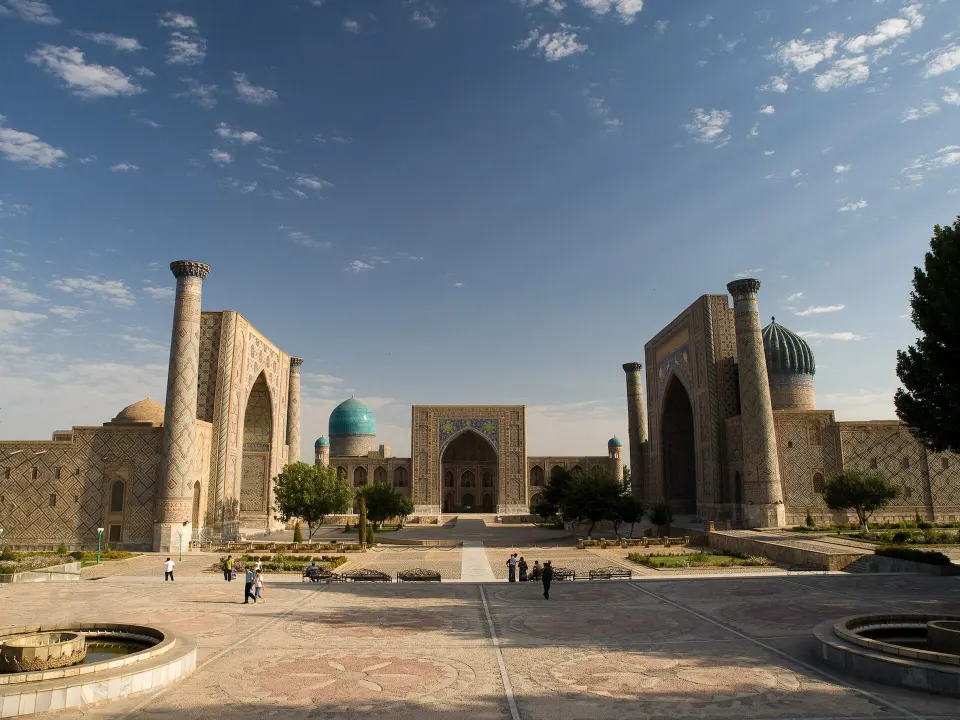
Uzbekistan holds the great Silk Road cities: Samarkand, Bukhara and Khiva. Blue-tiled madrasas, minarets and caravanserais survive here on a scale found nowhere else in Central Asia. For Indians the links run deep. Babur, founder of the Mughal empire, came from the Fergana valley, and the architecture of the Registan explains a great deal about the Taj Mahal and Humayun’s Tomb. Delhi to Tashkent takes about three hours.
Visa for Indians
Indian citizens apply for an eVisa at e-visa.gov.uz. The single-entry visa costs about US$20, takes up to three working days and allows 30 days. Your passport needs three months of validity after you leave. Hotels register your stay with the authorities automatically. Keep the registration slips until you exit. Rules checked in October 2026.
Getting there and around
- Nonstop flights run from Delhi to Tashkent daily, and from Mumbai on some days
- Other Indian cities connect through Delhi or a Gulf hub
- The Afrosiyob high-speed train runs Tashkent to Samarkand in about two hours and Samarkand to Bukhara in about one and a half hours
- Khiva is a short flight to Urgench or a long train ride from Bukhara
Train tickets sell out in spring and autumn. We book them with the hotels.
Tashkent
The capital mixes Soviet avenues with old quarters. See the Khast Imam complex, which holds an early Quran manuscript, the Chorsu bazaar, the metro stations decorated like palaces, and Amir Timur Square. One or two nights.
Samarkand
- The Registan: three madrasas facing a single square, the image of Uzbekistan
- Shah-i-Zinda: a lane of tiled mausoleums
- Gur-e-Amir, the tomb of Timur
- Bibi-Khanym mosque and the Siab bazaar
- Ulugh Beg’s observatory from the 15th century
Visit the Registan twice, by day and after the evening lights come on. Two nights.
Bukhara
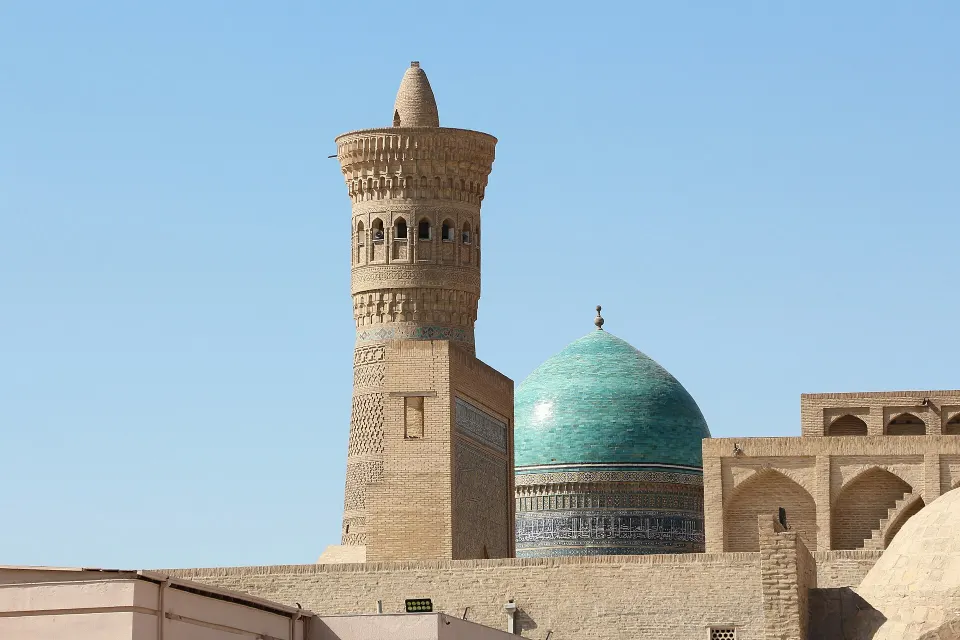
Bukhara is the most lived-in of the three cities. Stay inside the old town and walk everywhere: the Lyabi-Hauz pond, the Kalyan minaret and mosque, the Ark fortress, the trading domes and the Samanid mausoleum. Two nights.
Khiva
Khiva’s inner town, Itchan Kala, stands inside its mud-brick walls almost complete. Climb the Islam Khodja minaret, see the unfinished Kalta Minor and walk the walls at sunset. One or two nights. Khiva adds a day of travel, so include it on trips of seven nights or more.
Food for Indian travellers
Plov, the national rice dish with carrots and lamb, appears at every meal. Non vegetarians eat well: kebabs, samsa and lagman noodles. Vegetarians need planning. Bread, salads, dried fruit, nuts, vegetable soups and pumpkin samsa are easy. Tashkent and Samarkand have Indian restaurants. We tell every hotel in advance about vegetarian and Jain needs.
When to go
- April to May: spring flowers, 20°C to 28°C, the best months
- September to October: warm and dry, the melon and grape harvest
- June to August: 38°C to 42°C in Bukhara and Khiva
- November to March: cold, quiet and cheaper, snow at Chimgan near Tashkent
How many nights
- 4 nights: Tashkent and Samarkand
- 6 nights: Tashkent, Samarkand and Bukhara
- 7 to 8 nights: add Khiva
- Kazakhstan or Kyrgyzstan add mountains to a longer trip
What our trips cost
Our Uzbekistan packages start from about ₹26,000 per person for three nights, about ₹41,500 for the six-night Silk Road Classic and about ₹54,500 with Khiva, on twin sharing, without airfare. Return flights from Delhi usually add ₹18,000 to ₹30,000.
Practical tips
- The som is the currency. Cards work in cities, cash rules in bazaars
- Exchange money at banks, not in the street
- Dress modestly at mosques and shrines
- Carry your passport. Police checks happen on trains
Share your dates and we send a plan within 24 hours on working days.