
Bhutan by road from Bagdogra: route, permits and costs
Drive into Bhutan from Bagdogra via Phuentsholing: ID rules for Indians, the entry permit, Sustainable Development Fee, road times and a day-wise plan.
By the Agrima Holidays Team · Updated October 2026 · 3 min read
Why go by road
Flights to Paro are short and scenic but expensive and few. The road route through Phuentsholing costs less, works for families with luggage and gives you the drive up from the plains of north Bengal into the Himalaya. You cross from India to Bhutan on foot or by car through the border gate at Jaigaon.
ID rules for Indians
Indian citizens need no visa or passport for Bhutan. Carry one of these for every traveller:
- A valid Indian passport, or
- A voter ID card
Children under 18 carry a birth certificate or a passport. Aadhaar, PAN and driving licences are not accepted. Carry two printed photos and photocopies of the ID.
At Phuentsholing the immigration office issues the entry permit for Thimphu and Paro. Travel to Punakha, Phobjikha and beyond needs a route permit, issued in Thimphu. We file the permits online in advance.
Sustainable Development Fee
Indian travellers pay a Sustainable Development Fee of ₹1,200 per person per night. Children aged 6 to 12 pay half, and children under 6 pay nothing. We include the fee in our quotes. Check the current rate when you book, since Bhutan has revised the fee in the past.
The route
- Bagdogra airport or New Jalpaiguri station to Jaigaon and Phuentsholing: about 160 km, four to five hours through the tea gardens of the Dooars
- Phuentsholing to Thimphu: about 150 km, five to six hours on a winding mountain road
- Thimphu to Paro: about 55 km, one and a half hours
- Thimphu to Punakha over the Dochula pass: about 75 km, two and a half to three hours
Most plans stay one night in Phuentsholing on arrival, since immigration offices keep working hours and close on Bhutanese holidays.
What to see
- Thimphu: the Buddha Dordenma statue, the National Memorial Chorten, Tashichho Dzong and the weekend market
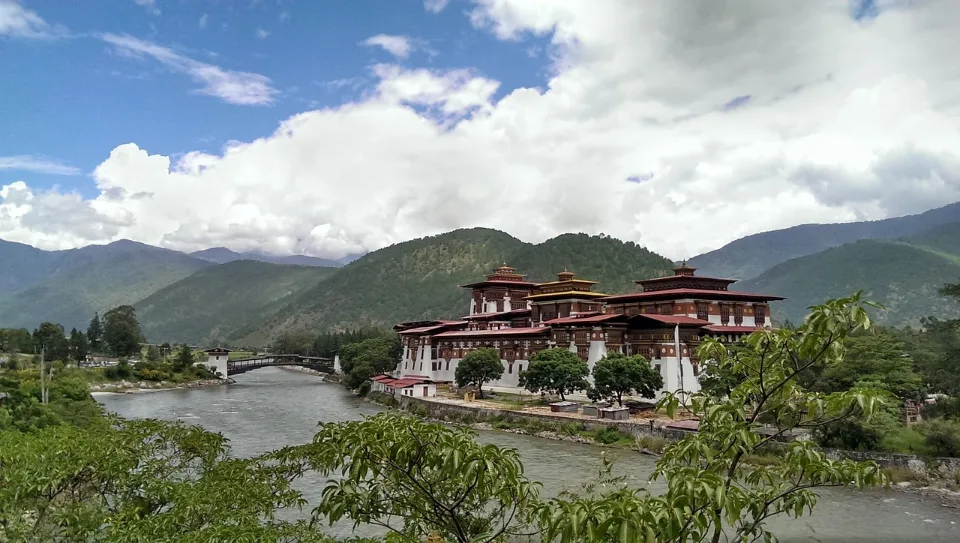
- Punakha: the dzong at the meeting of two rivers, the suspension bridge and Chimi Lhakhang
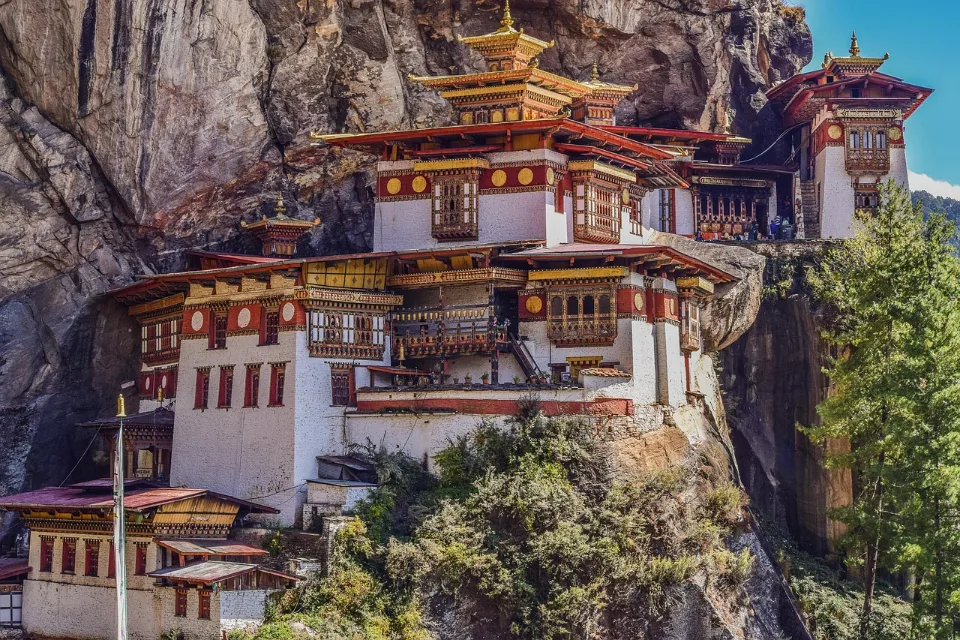
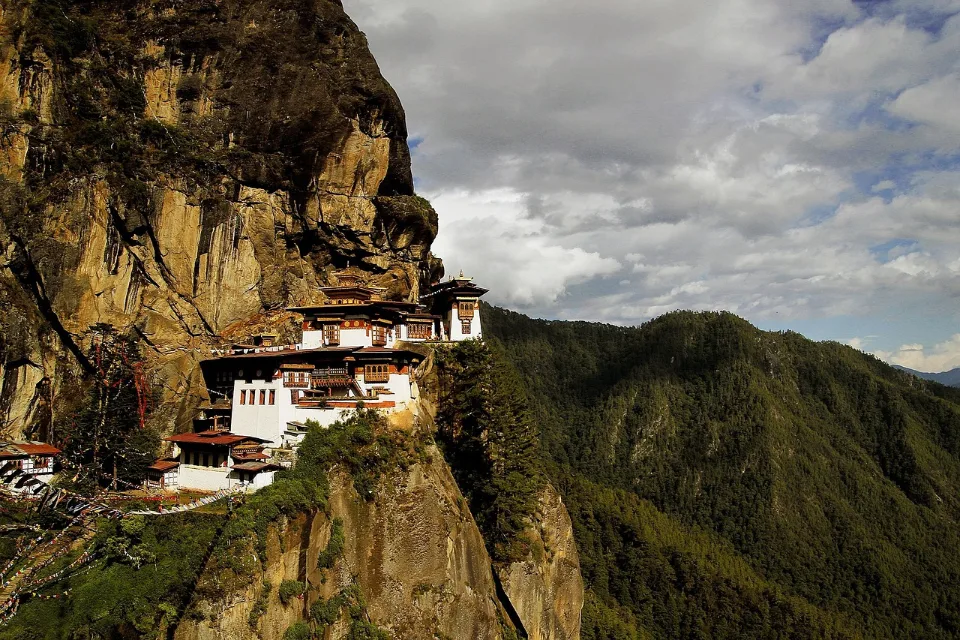
- Paro: the hike to Taktsang, the Tiger’s Nest monastery, Paro Dzong and Kyichu Lhakhang
- Phobjikha: the glacial valley where black-necked cranes winter from November to February
The Tiger’s Nest hike
The climb to Taktsang takes four to six hours return from the car park at about 2,600 m to the monastery at about 3,100 m. The path is steep but well made. Ponies carry riders to the halfway café. Start by 8 am, wear proper shoes and carry water. Keep the hike for the last full day in Paro, after you adjust to the altitude.
When to go
- March to May: rhododendrons in bloom, clear mornings
- September to November: the clearest skies and the big festivals at Thimphu and Paro
- December to February: cold, crisp and quiet
- June to August: monsoon, landslides on the Phuentsholing road, the least comfortable months
How many nights
A road trip needs at least six nights: one in Phuentsholing, two in Thimphu, one in Punakha and two in Paro. Add a night for Phobjikha. Exit by the same road, or fly out of Paro to Delhi or Kolkata to save a long drive.
What our trips cost
Our Bhutan by road package from Bagdogra starts from about ₹39,000 per person for six nights on twin sharing, with a private car, hotels with breakfast and dinner, and permits. The Sustainable Development Fee and train or flight to Bagdogra are extra.
Practical tips
- The ngultrum is pegged to the rupee. Indian notes of ₹100 and below work everywhere
- Dress modestly for dzongs: full sleeves, long trousers or skirts
- Smoking in public is restricted and tobacco is taxed heavily
- Indian SIM cards stop working past Phuentsholing. Buy a B-Mobile or TashiCell SIM at the border
- Carry warm layers in every season for evenings in Paro
Tell us your dates and group size. We send a road plan within 24 hours on working days.